This ocean current moves heat equal to 50 times humanity’s power
A key Atlantic Ocean current that moves as much heat as 50 times the world's total power consumption may be weakening, prompting scientists to debate how fast the change is happening.
A single ocean current moves roughly one petawatt of heat northward through the Atlantic, an amount of energy equal to about 50 times the total power humanity consumes, according to a BBC report. That current, known as the Atlantic Meridional Overturning Circulation or AMOC, is now at the centre of one of the most closely watched debates in climate science.
The AMOC acts as a planetary conveyor belt, pulling warm surface water from the tropics north toward the Arctic and sending colder, denser water back south through the deep ocean. Its heat transfer is why Britain and northwestern Europe enjoy a milder climate than other regions sitting at the same latitude.
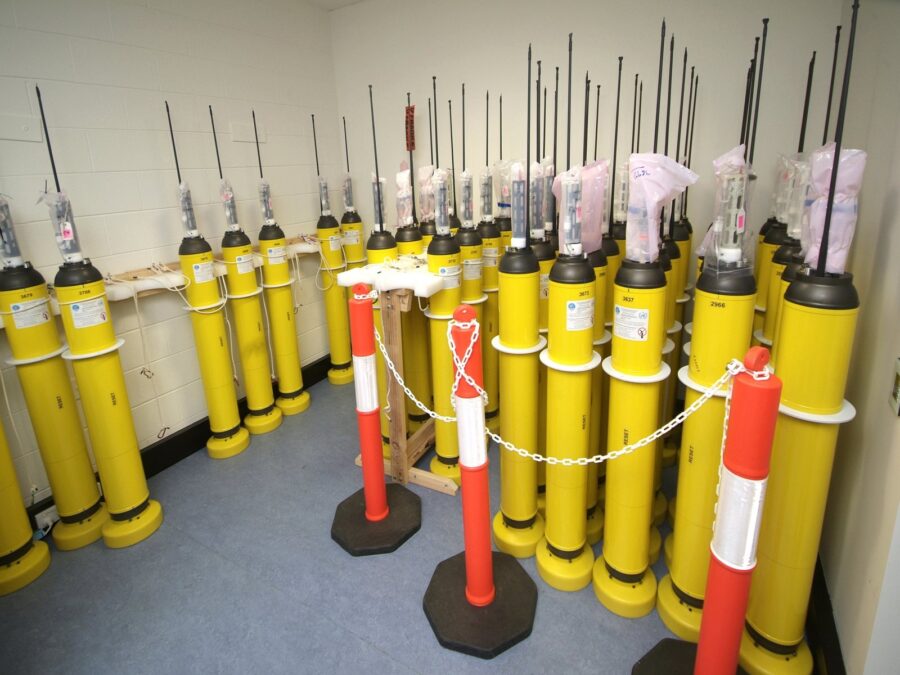
To track the system, researchers are using uncrewed floats, including a bright yellow, human-sized probe drifting in the waters off Greenland that dives, measures temperature, pressure and salinity, then surfaces to beam its data to a satellite. Scientists broadly agree the AMOC will weaken as the planet warms; what remains disputed is how quickly that will happen and what it will mean for the seasons.
Some point to a patch of unusual cooling in the North Atlantic, nicknamed the ‘cold blob,’ as early evidence of a slowing current. Stefan Rahmstorf, an ocean physicist at the Potsdam Institute for Climate Impact Research who has studied the AMOC for three decades, describes the cold blob as a clear fingerprint of that slowdown, driven by melting ice and heavier rainfall adding fresh water that is too light to sink as the colder, saltier water once did.
Rahmstorf once viewed a complete AMOC shutdown as a highly unlikely worst-case scenario but now believes the risk of crossing a definitive tipping point is real, warning that crossing it could make a shutdown self-amplifying and unstoppable, with effects reaching the West African monsoon and tropical rainfall belts that hundreds of millions of people depend on.
Other scientists caution against reading too much into the trend. Andrew Watson of the University of Exeter notes the AMOC has changed before in Earth’s history and may simply reorganise rather than collapse, a view supported by a UK Met Office study finding a full shutdown unlikely this century. The Intergovernmental Panel on Climate Change’s 2021 assessment likewise expects the current to weaken in the coming decades without stopping before 2100.
Wikimedia Commons/by Bruce Miller, CSIRO




Leave a Reply