9 million empty homes: why Japan hires people to hunt ghosts
Facing millions of vacant homes, Japanese firms are now paying overnight investigators to certify stigmatized properties are free of paranormal activity so they can be sold or rented.
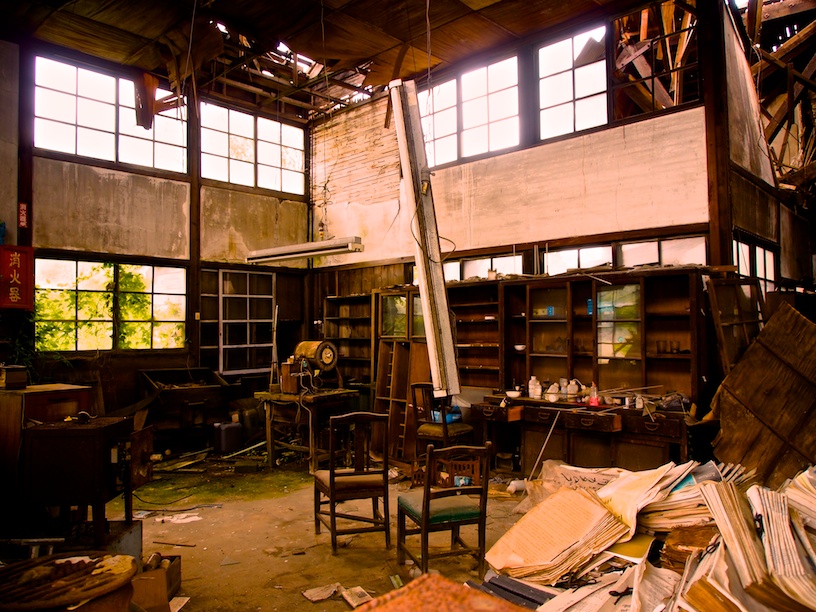
Japan is sitting on nine million empty homes, according to a government survey from late 2024 — 13.8% of all residential properties in the country. A meaningful slice of that vacancy problem comes down to something hard to fix with policy alone: fear. Many of these homes are ‘jiko bukken,’ or stigmatized properties, where a suicide, murder, fatal fire or ‘lonely death’ has occurred, and Japanese buyers and renters simply won’t touch them.
Enter a small but growing niche business: the overnight ghost investigation. A property management company called Kachimode charges 88,000 yen (roughly Rs 31,000, or $542) per property to send an investigator to spend the night — from 10 p.m. to 6 a.m. — inside a stigmatized home, wired up with video cameras, audio recorders, thermography equipment, electromagnetic wave detectors, and sensors for temperature, humidity, atmospheric pressure and noise. At the end of it, the company issues a report that agents can show prospective buyers as evidence the house is clear of ‘bad spirits.’
Kachimode president Kazutoshi Kodama, who also consults a university professor specializing in monitoring supernatural phenomena, told DW that the underlying cultural belief is straightforward: ‘Death equates to impurity and misfortune.’ He said many Japanese people won’t even visit a stigmatized property, and one two-storey house in Yokohama has remained vacant for at least five years as a result, despite being structurally fit for renovation.
The equipment doesn’t always stay quiet. Kodama said cameras have unexpectedly stopped recording and microphones have malfunctioned during investigations, though almost all such incidents turn out to be isolated and cannot be reproduced. A smaller number of properties, he added, show unexplained activity that persists over extended periods, making them especially tough to sell even after being cleared.
The financial toll of a stigmatized label is steep. Japanese law requires disclosure of a property’s history to buyers and tenants, and dedicated websites track which homes qualify and why, forcing landlords to slash rents by around 30% in big cities and as much as 50% in smaller towns. Kodama said he is aware of one property that sat empty for more than 1,000 days. Joey Stockerman, co-founder of Akiya Mart, described an investor who bought a stigmatized Tokyo-suburb property for under $5,000 — about 5% of its actual value — that still took two years to rent out.
Akiya Mart has taken a different approach to the same problem, offering a package where a Shinto priest performs a traditional cleansing ritual on a property before it goes back to market. Between the ritual cleansings and the overnight ghost hunts, Kodama sees room for the business to grow: ‘I think this sector has potential because there are people in need,’ he said, even as he acknowledged that the toughest properties — the ones where phenomena keep recurring — remain genuinely difficult to place.
[Wikimedia Commons/by Syuzo Tsushima]





Leave a Reply