Quote of the day: What Carl Friedrich Gauss really meant about truth and trivia
Carl Friedrich Gauss's quote about philosophers, truth and trivial statements carries a sharper meaning than it first appears.
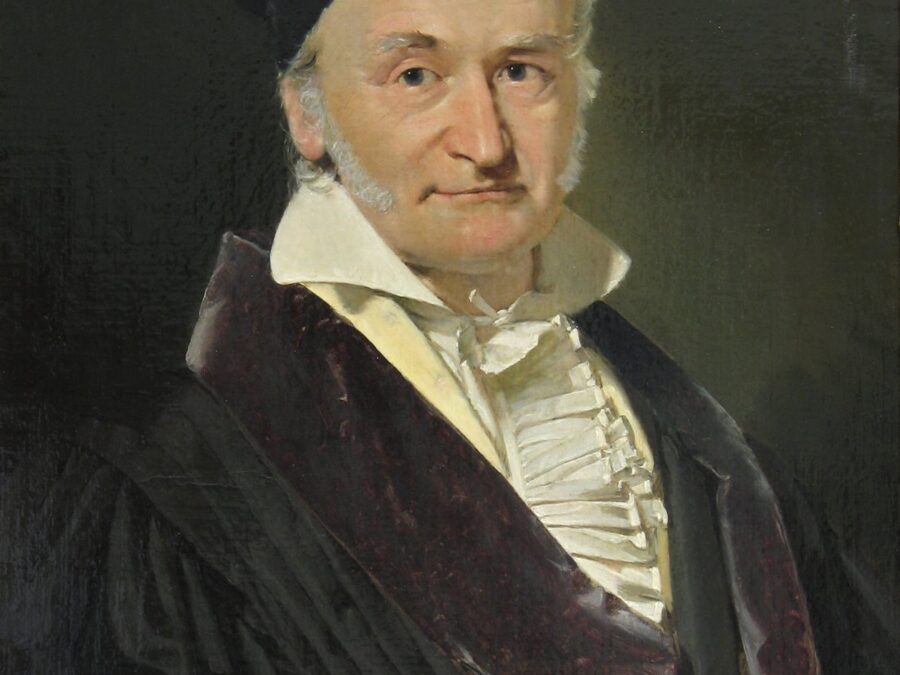
‘When a philosopher says something that is true then it is trivial. When he says something that is not trivial then it is false.’ The line belongs to Carl Friedrich Gauss, one of the greatest mathematicians in history, and it reads like a joke at philosophy’s expense, though a serious point sits underneath the wit.
Gauss was pointing at a contrast between fields built on objective proof and fields that lean heavily on interpretation. His first claim, that true philosophical statements tend to be trivial, holds up: ideas like honesty being important or curiosity helping people learn are true but rarely surprising, since they already match ordinary human experience.
The second half of the quote is sharper. Gauss argued that when a philosophical claim sounds genuinely original or unusually complex, that complexity should raise suspicion rather than admiration, because ideas earn respect by surviving scrutiny, not by sounding sophisticated.
Einstein later made a similar point, arguing that everything should be made as simple as possible, but no simpler. The strongest scientific theories, such as Newton’s gravity or Darwin’s natural selection, reduce a mess of observations to a small number of clear principles. Gauss reached that same conclusion long before it became a common observation about good science: truth rarely needs elaborate decoration.




Leave a Reply