It took cyanobacteria 2 billion years to finish the job they started
Cyanobacteria began producing oxygen through photosynthesis hundreds of millions of years before it actually accumulated in Earth's atmosphere, a new review shows.
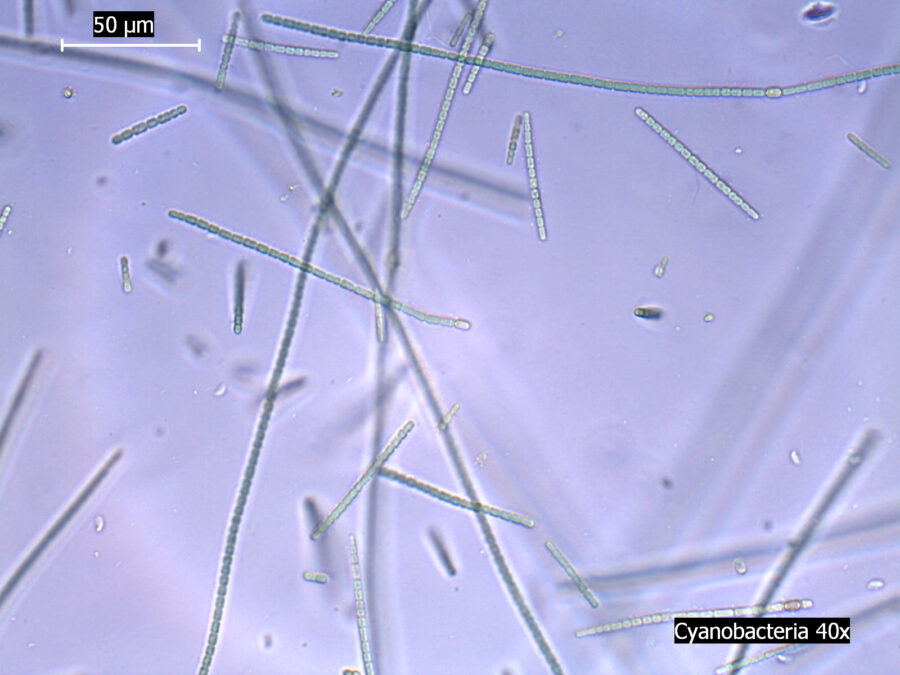
It is one of science’s slower revolutions. Around 2.4 billion years ago, tiny organisms called cyanobacteria began filling Earth’s atmosphere with oxygen through photosynthesis — but the full transformation this set in motion took roughly two billion more years to complete.
According to a review titled ‘The rise of oxygen in Earth’s early ocean and atmosphere’, published in Nature, this event, known as the Great Oxidation Event, was not a single switch but a drawn-out process. Free oxygen first accumulated in the atmosphere, then lagged behind in the oceans, and only reached levels close to today’s roughly two billion years after the process began. The review frames it as a coupled biological and geochemical story, where early oxygen production was constantly balanced against reactions with reduced gases and minerals.
Before this shift, Earth’s atmosphere was almost entirely without oxygen, dominated instead by gases like methane and carbon dioxide, while simple microbial life thrived in oxygen-free conditions. Cyanobacteria are believed to have evolved oxygen-producing photosynthesis hundreds of millions of years before atmospheric oxygen actually began to build up. In the meantime, the oxygen they released reacted with dissolved iron and other reduced compounds in the ocean and Earth’s crust, effectively acting as natural sinks that absorbed the gas before it could accumulate in the air.
Only once these oxygen sinks became saturated did the gas start building up in significant amounts, around 2.4 billion years ago. Researchers say this gradual sequence explains why the biological innovation of oxygen-producing photosynthesis preceded the dramatic atmospheric shift by hundreds of millions of years.
One of the strongest pieces of evidence for the timing comes from ancient rocks: geologists have identified a sudden disappearance of mass-independent fractionation of sulfur isotopes in sediments dating to about 2.4 billion years ago, a chemical signature that can only exist when atmospheric oxygen levels are extremely low. Its disappearance is regarded as one of the clearest indicators that oxygen levels had risen.
The consequences reached far beyond the atmosphere. Oxygen proved toxic to many of the microorganisms that had dominated early ecosystems, but it also opened the door for organisms that could use oxygen far more efficiently to generate energy — a shift that, per the Annual Review of Earth’s Planetary Sciences, laid the environmental foundation for the later evolution of complex eukaryotic cells and eventually multicellular life.
Wikimedia Commons



Leave a Reply