The ‘third cell’ Japan says could regrow your hair for good
OrganTech and RIKEN researchers say a newly identified 'third cell,' combined with two known follicle cell types, rebuilt a complete, cycling hair follicle in mice.
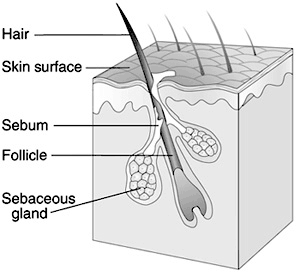
A hair follicle needs more ingredients than scientists thought — and Japanese researchers say they’ve finally found the missing one. A joint team from RIKEN Institute and OrganTech has identified a ‘third cell’ that, layered together with two already-known cell types, was able to fully reconstruct a working hair follicle capable of a natural growth-and-shedding cycle. The study was published in Biochemical and Biophysical Research Communications.
Hair loss is a near-universal experience — around 80% of men and 50% of women go through some degree of pattern baldness — yet the treatments on the market, from topical oils to surgical transplants, mostly slow the process rather than reverse it. The new findings come from a team led by Takashi Tsuji, a visiting senior researcher at RIKEN and OrganTech’s chairperson, who has worked for nearly two decades on regenerating organs from adult stem cells.
Hair itself grows through a defined cycle — anagen (growth), catagen (transition), telogen (rest), and exogen (shedding) — and scientists had managed since 2012 to recreate part of that cycle by combining epithelial stem cells and dermal papilla cells taken from adult mouse whiskers. Those combined cells could induce new hair growth once transplanted, but the structures weren’t self-sufficient: after transplantation, cells from nearby tissue kept moving in to support them, a clue that a piece of the puzzle was still unaccounted for.
Tsuji’s team eventually traced that missing piece to around-bulge mesenchyme (ABM) cells, found in tissue close to the follicle. Adding ABM cells to the two known cell types and transplanting the trio into engineered skin allowed the full hair cycle — repeated growth and shedding — to play out in the lab, tested successfully in mice, with the new cells shown to trigger the shift from a resting phase into active growth and to help the follicle elongate.
The study also documented something not clearly shown before: hair doesn’t simply get pushed upward by the follicle. Instead, the hair bulb at the follicle’s base gradually migrates downward toward the subcutaneous fat layer as the visible strand rises — a ‘downgrowth’ process the researchers attribute to the newly identified cells as they differentiate around the bulb.
The team believes the path forward involves harvesting these regeneration-supporting cells from patients, expanding them in culture, and reintroducing them to affected scalp areas. OrganTech CEO Yoshio Shimo called it “a foundational cellular configuration for functional hair follicle regeneration,” tying the discovery to the company’s broader ambitions in organ-level regenerative medicine.
Image credit: Wikimedia Commons/NIH (public domain).





Leave a Reply