479 genes just revealed how farming rewired human evolution
Harvard researchers identified 479 gene variants showing strong evidence of directional selection in humans, many linked to diabetes, schizophrenia and infection resistance.
Instead of the handful of clear-cut cases scientists had previously identified, a massive new study from Harvard Medical School has uncovered 479 gene variants showing strong evidence of directional selection in humans, meaning specific genetic traits were consistently favoured or pushed out of populations over thousands of years.
The research, led by geneticist David Reich and published in the journal Nature, analysed nearly 16,000 ancient human genomes stretching back 10,000 years. According to a summary from Harvard’s Department of Human Evolutionary Biology, more than half of these gene variants have known links to disease risk and other traits still relevant to human health today, including risk factors for type 2 diabetes and schizophrenia, and genes tied to immune response and resistance to infections like tuberculosis.
Collecting the DNA was only half the challenge. Distinguishing real, meaningful selection from other genetic noise, like migration, population mixing or plain random chance, is notoriously difficult. Ali Akbari, first author of the study and a senior scientist in Reich’s lab, developed a new computational method specifically designed to filter out these confounding factors.
Even with these tools, the underlying signal was faint. Researchers estimate that directional selection accounts for only around 2% of all genetic changes observed, though across an entire genome and ten millennia, even that small share adds up to something significant.
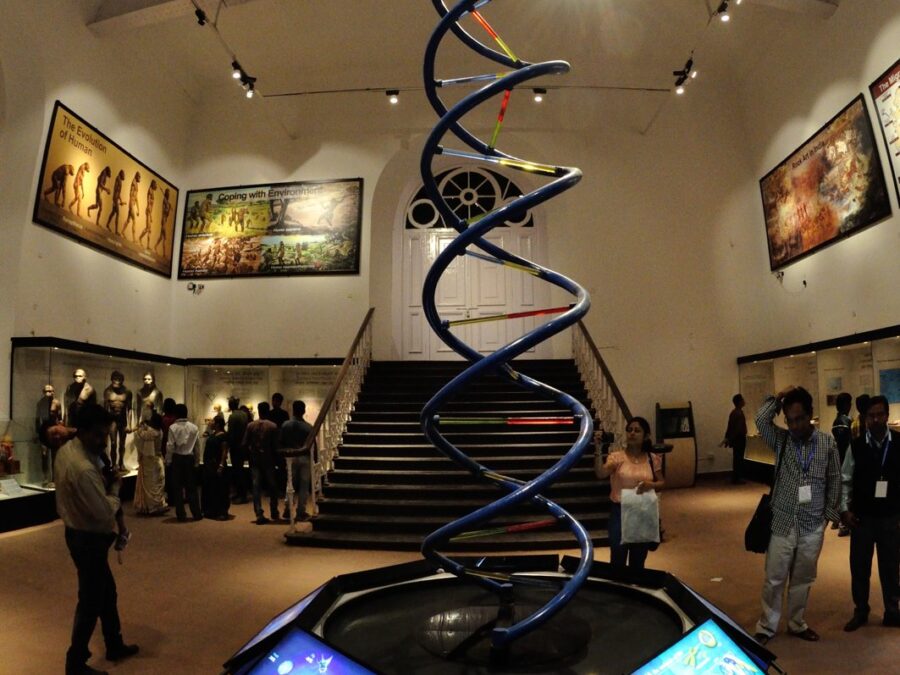
Image: Wikimedia Commons/by Biswarup Ganguly




Leave a Reply