New ionosphere model targets the exact zone where most satellites orbit: within 1,000 km of Earth
A new ionosphere model developed by Indian researchers focuses precisely on the roughly 1,000-kilometre zone where most low Earth orbit satellites operate.
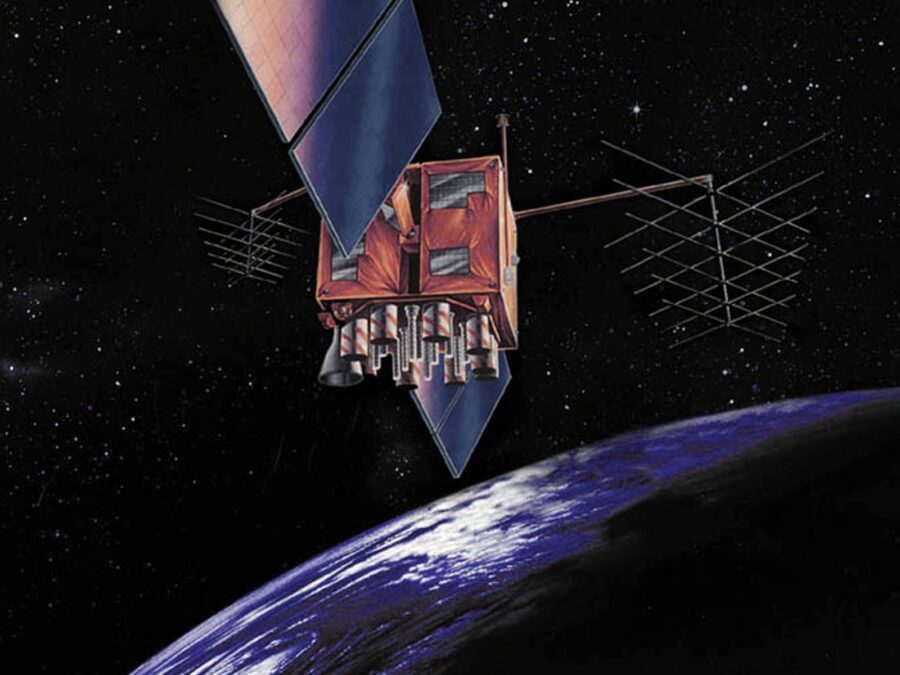
Most low Earth orbit satellites, including many used for communication and Earth observation, operate within roughly 1,000 kilometres of Earth. A new model developed by Indian scientists captures conditions in precisely this zone more accurately than before, potentially improving satellite operations, navigation and communication reliability.
The model focuses on the ionosphere, a layer of Earth’s upper atmosphere filled with electrically charged particles that acts as a highway for radio waves and lies along the path travelled by navigation satellite signals. Changes in the density of these particles can delay or distort signals, affecting aircraft navigation, shipping, emergency communications and everyday location services.
Predicting ionospheric conditions is especially difficult over India, which lies close to the geomagnetic equator, where the movement of charged particles is particularly complex. Older models assumed the ionosphere thins out at a fixed, steady rate with height, a simplification that meant they often drifted from actual conditions overhead.
Researchers at the Indian Institute of Geomagnetism, an autonomous institute under the Department of Science and Technology, addressed this by combining ground-based ionosonde observations with satellite measurements from the COSMIC radio occultation mission, reconstructing how charged-particle density actually changes with height over the Indian region.
The research, by K Siba Kiran Guru, S Sripathi and RK Barad, was published in the journal AGU Radio Science. The team says the approach could help mission planners predict radio signal behaviour and improve satellite tracking, and could be adapted for other parts of the world to strengthen regional space weather prediction.




Leave a Reply