Tiny Ocean Creatures Are Quietly Storing Carbon Beneath the Black Sea
NASA says the turquoise phytoplankton blooms turning the Black Sea a milky blue each summer also carry carbon into the ocean depths as the organisms die and sink.
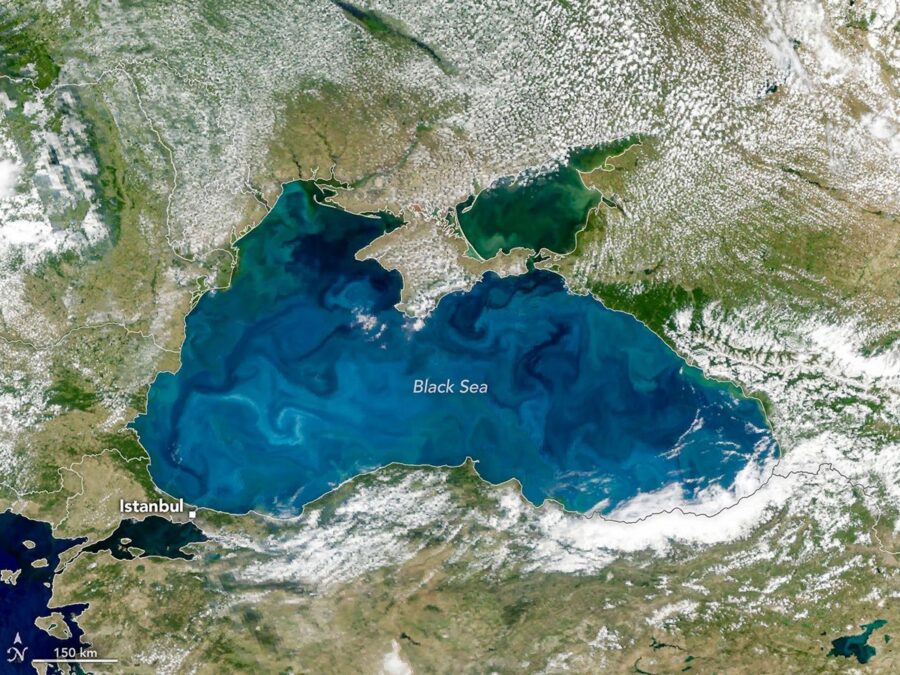
Beyond their striking colour, the phytoplankton blooms that turn parts of the Black Sea turquoise every summer play a quieter role in the planet’s carbon cycle, according to NASA. The organisms responsible, called coccolithophores, absorb carbon during their life cycle.
NASA’s PACE satellite captured a clear example of the bloom on 22 June 2026, when its Ocean Color Instrument recorded large stretches of the Black Sea covered in pale, milky-blue water. The colour comes from sunlight reflecting off the calcium-carbonate plates that coat each coccolithophore.
When these microscopic organisms die, part of the carbon they have absorbed can sink toward the seabed, where it may remain stored for extended periods. That process is one reason NASA says images like the PACE photograph are more than simply attractive pictures of ocean colour.
The blooms typically become most abundant in late spring and early summer, before giving way later in the year to diatoms, a different type of phytoplankton with silica-based shells that tend to darken the water instead of brightening it.
A related bloom was visible even earlier in the season. On 27 May 2026, an astronaut aboard the International Space Station photographed turquoise ribbons of water tracing currents through the Bosphorus strait near Istanbul, which connects the Black Sea to the Sea of Marmara.
Because coccolithophore blooms reflect so much sunlight, they are easy for satellites to detect, which lets researchers monitor changes in marine ecosystems across large areas without needing to sample the water directly.
NASA Earth Observatory/by Michala Garrison



Leave a Reply