He never saw it finished: the T. rex named for a rancher who died first
A Tyrannosaurus rex fossil named after South Dakota ranch owner Gary Licking, who died before its restoration was complete, has sold for a record $50.1 million.
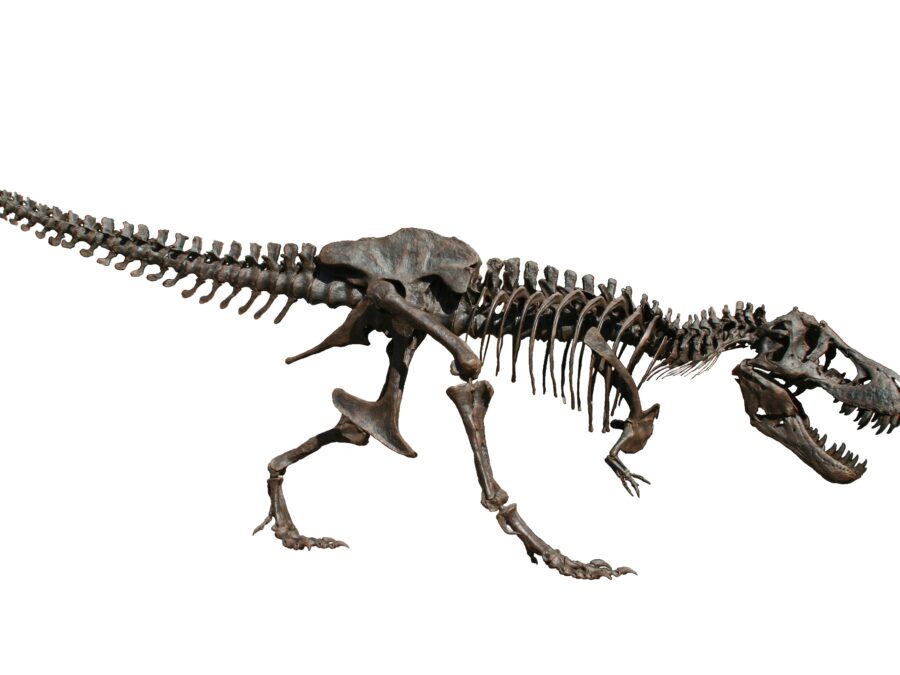
A Tyrannosaurus rex skeleton carries the name of a rancher who never got to see it fully restored. ‘Gus,’ as the fossil is known, is named after Gary Licking, the owner of the South Dakota ranch where it was discovered in 2021. Gary died before the years-long restoration was finished, though his widow, Dana Licking, remained closely involved with the project, with the excavation team sharing major milestones and newly restored parts of Gus with her throughout the process.
The skeleton has now sold for $50.1 million at a Sotheby’s auction in New York, a record for the most expensive dinosaur fossil ever sold. It surpassed the previous record held by the stegosaurus ‘Apex,’ which sold for nearly $45 million in 2024, and easily outpaced ‘Stan,’ a T. rex skeleton that fetched close to $32 million in 2020.
Gus was found almost by chance, after a fossil-hunting team decided to spend a couple of extra days exploring a different area once they had wrapped up another excavation nearby. The first fossil they uncovered, a metatarsal bone from the dinosaur’s foot, appeared just hours into the search. A five-year excavation, mapping and restoration effort followed, during which nearly 1,000 individual fossil pieces were recovered, catalogued and reassembled by hand.
According to Sotheby’s, Gus is a 38-foot-long (11.5-metre), 67-million-year-old Tyrannosaurus rex and one of the largest and most complete specimens ever discovered. It stands around 12.5 feet (3.8 metres) tall, is 63 per cent complete, and includes an exceptionally preserved skull, two well-preserved feet and a rare furcula, or wishbone.
The winning bidder, whose identity has not been disclosed, outbid six other prospective buyers in a 10-minute bidding battle, pushing the final price well past the pre-auction estimate of $20 million to $30 million. Sotheby’s vice chair Cassandra Hatton called it an exceptional find that had been ‘excavated, documented, prepared, and cared for with real excellence.’
Not everyone welcomed the sale. Ahead of the auction, the Society of Vertebrate Paleontology urged that scientifically important fossils like Gus remain in public museums and research institutions, where they can continue to be studied for years to come.
Wikimedia Commons/by Eirik Newth


Leave a Reply